
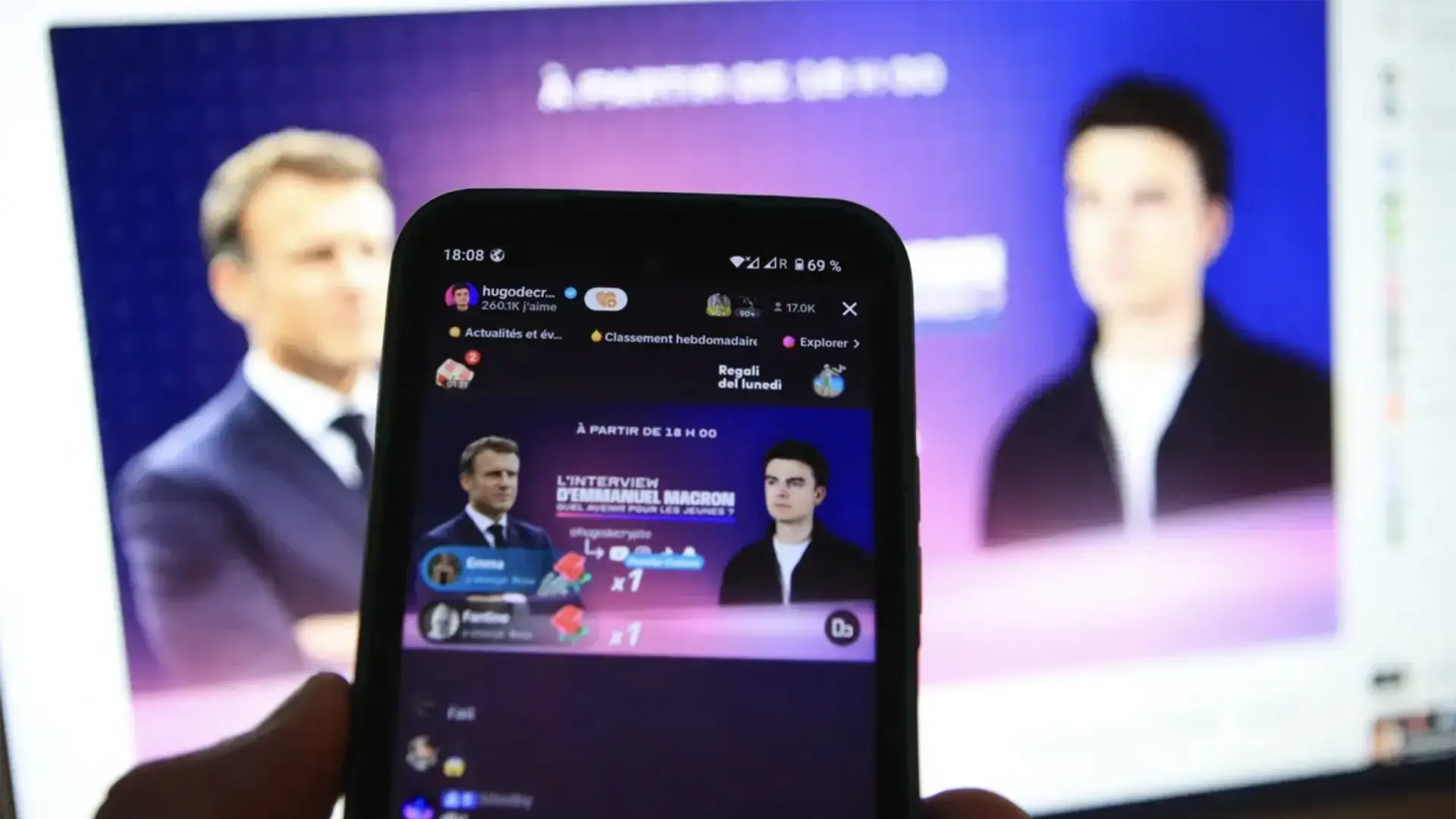

In the run-up to the 2027 presidential election, content creators are playing an increasingly significant role in public debate. Arcom has now clarified the rules that will apply to certain online channels, particularly those that regularly cover political topics. This shift brings the creators concerned closer to the obligations faced by traditional broadcast media.
Not all creators are affected
These rules do not apply to all influencers. They target channels that meet the legal definition of an on-demand audiovisual media service (ODAMS) and regularly contribute to public debate.
To determine which channels fall under the scope, Arcom takes into account the nature of the content, its audience reach, and the frequency of political commentary. An isolated political video or a single viral post is therefore not enough to automatically subject a creator to these rules.
Conversely, a channel that regularly features political interviews, current affairs analyses, or societal debates may be affected if it satisfies the established criteria.
What are the obligations for the 2027 presidential election?
The channels concerned will have to comply with the principles of fairness, followed by strict equality, between candidates. Two distinct phases are planned: from March 16 to April 4, 2027, candidates must receive airtime proportional to their political representativeness. From April 5 onwards, the principle of strict equality will take effect, requiring identical exposure for each candidate.
Fairness does not rely solely on speaking time. Arcom also takes into account video length and format, along with titles, thumbnails, and how prominently content is featured in recommendations and channel catalogs.
Impacted creators must also report on election news with fairness and integrity. Paid political advertising is prohibited under this framework: this ban has been in effect since October 1, 2026, ahead of the first round of the 2027 presidential election.
This development highlights the growing role creators play in news and information. For those who regularly cover political topics, social media is no longer an unregulated space: they may also be subject to rules similar to those governing traditional media.